ehrdata.EHRData#
- class ehrdata.EHRData(X=None, *, obs=None, var=None, tem=None, uns=None, obsm=None, varm=None, layers=None, raw=None, shape=None, filename=None, filemode=None, asview=False, obsp=None, varp=None, oidx=None, vidx=None, tidx=None)#
Model two and three dimensional electronic health record data.
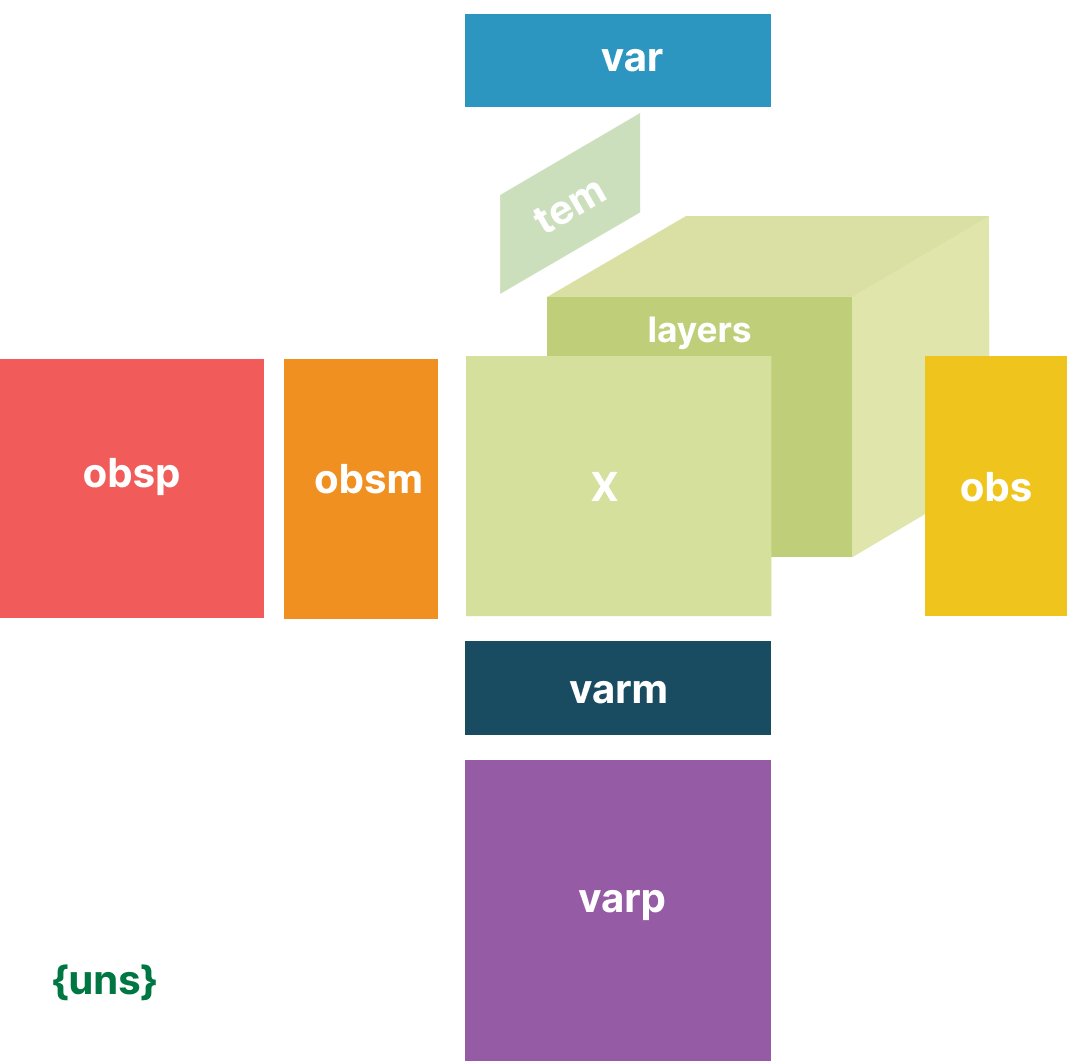
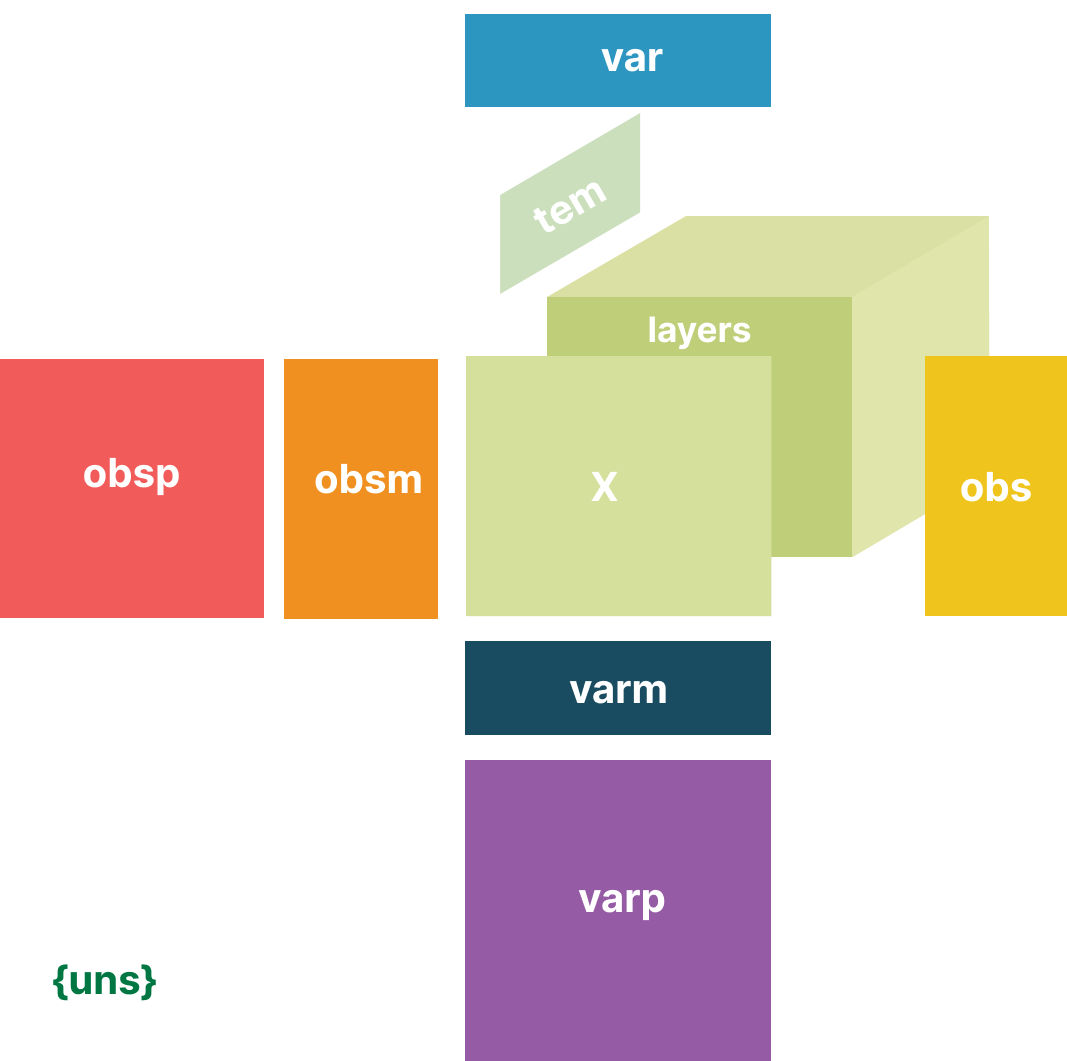
EHRData stores a data array
Xtogether with annotations of observationsobs(obsm,obsp), variablesvar(varm,varp), timetem, and unstructured annotationsuns.Extends
AnnDatato further support time-series data.- Parameters:
- X XDataType |
DataFrame|None(default:None) A #observations × #variables (× #time) data array.
- obs
DataFrame|Mapping[str,Iterable[Any]] |None(default:None) Key-indexed one-dimensional observations annotation of length #observations.
- var
DataFrame|Mapping[str,Iterable[Any]] |None(default:None) Key-indexed one-dimensional variables annotation of length #variables.
- tem
DataFrame|None(default:None) Key-indexed one-dimensional time annotation of length #time.
- uns
Mapping[str,Any] |None(default:None) Key-indexed unstructured annotation.
- obsm
ndarray|Mapping[str,Sequence[Any]] |None(default:None) Key-indexed multi-dimensional observations annotation of length #observations. If passing a
numpy.ndarray, it needs to have a structured datatype.- varm
ndarray|Mapping[str,Sequence[Any]] |None(default:None) Key-indexed multi-dimensional variables annotation of length #variables. If passing a
numpy.ndarray, it needs to have a structured datatype.- obsp
ndarray|Mapping[str,Sequence[Any]] |None(default:None) Pairwise annotation of observations, a mutable mapping with array-like values.
- varp
ndarray|Mapping[str,Sequence[Any]] |None(default:None) Pairwise annotation of variables/features, a mutable mapping with array-like values.
- layers
Mapping[str,ndarray] |None(default:None) Key-indexed multi-dimensional #observations × #variables (× #time) data arrays, aligned to dimensions of
X.- shape
tuple[int,int] |None(default:None) Shape tuple (#observations, #variables, #time). Can only be provided if
Xis None.- filename
PathLike[str] |str|None(default:None) Name of backing file. See
h5py.File.- filemode
Literal['r','r+'] |None(default:None) Open mode of backing file. See
h5py.File.- oidx Index1D |
None(default:None) Observation index for initialising as a view.
- vidx Index1D |
None(default:None) Variable index for initialising as a view.
- tidx Index1D |
None(default:None) Time index for initialising as a view.
- X XDataType |
Attributes table#
A #observations × #variables (× #time) data array. |
|
Change to backing mode by setting the filename of a |
|
|
|
|
|
Key-indexed multi-dimensional #observations × #variables (× #time) data arrays, aligned to dimensions of |
|
Number of observations. |
|
Number of variables/features. |
|
Number of time points. |
|
One-dimensional annotation of observations ( |
|
Names of observations (alias for |
|
Key-indexed multi-dimensional observations annotation of length #observations. |
|
Pairwise annotation of observations, a mutable mapping with array-like values. |
|
Shape tuple (#observations, #variables, #time). |
|
One-dimensional annotation of time ( |
|
Unstructured annotation (ordered dictionary). |
|
One-dimensional annotation of variables/ features ( |
|
Names of variables (alias for |
|
Key-indexed multi-dimensional variables annotation of length #variables. |
|
Pairwise annotation of variables/features, a mutable mapping with array-like values. |
Methods table#
|
Returns a copy of the EHRData object. |
|
Create an EHRData object from an AnnData object. |